Last updated: November 12, 2026
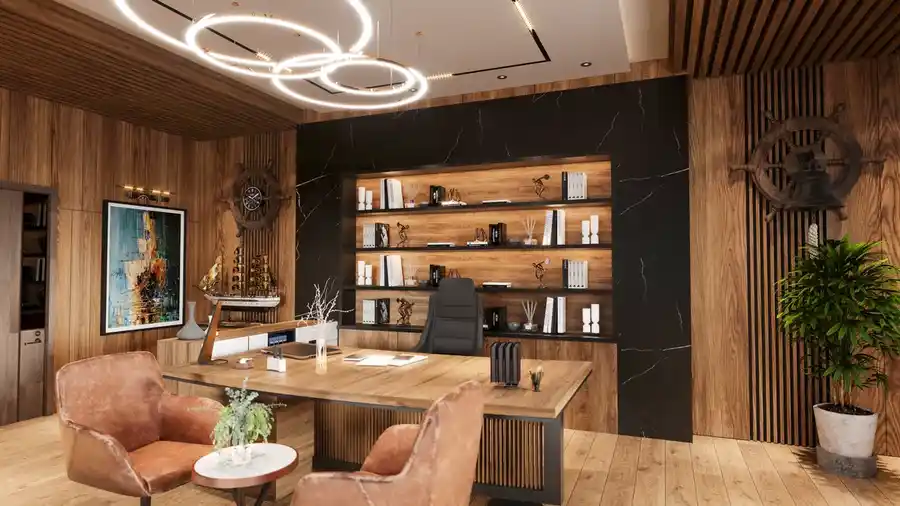
Premium home office furniture for executive and client-facing spaces — the Complete Guide — needs to look sharp, support long workdays, and avoid the weak feel that cheap office pieces give a room. The right setup is executive-grade seating, a desk with real cable control, storage that hides clutter, and finishes that read as intentional in a camera frame. In this premium home office furniture for executive and client-facing spaces — the Complete Guide, I’ll cover what matters, what to skip, and how to choose pieces that hold up in a room clients can actually see.
Key Takeaways
- Executive spaces need furniture that looks composed from the doorway and on video.
- Good pieces hide cords, keep the work surface clear, and support long sitting blocks.
- A polished room is not the same as a pricey room.
- The right choices balance scale, materials, comfort, and maintenance.
- Skip anything that looks fine in a product photo but feels flimsy up close.
Our Top 3 Picks at a Glance
For a premium executive home office, a strong setup is a real wood desk, a high-back task or executive chair, and a storage piece with closed fronts; check current price at multiple retailers before you buy. A room like this works best when every piece has a job, not just a style.
| Product / Option | Best For | Core Spec | Standout Feature | Action |
|---|---|---|---|---|
| Option A: Executive desk with closed cable management | Client-facing offices that need a clean camera view | Full-size desktop, hidden cord path, modesty panel or finished back | Keeps the room looking finished from every angle | Compare current price at the brand site, Amazon, and Walmart |
| Option B: Ergonomic executive chair | Long workdays and back-to-back calls | Adjustable height, armrests, tilt, supportive back | Solves the comfort problem without looking like lab equipment | Check current price at the brand site, Amazon, and Best Buy |
| Option C: Credenza or storage cabinet | Hiding paper stacks, printers, and files | Closed storage, durable surface, lockable drawers on some models | Makes a room look controlled, not crowded | Compare current price at the brand site, Amazon, and office retailers |
What makes premium home office furniture worth paying for?
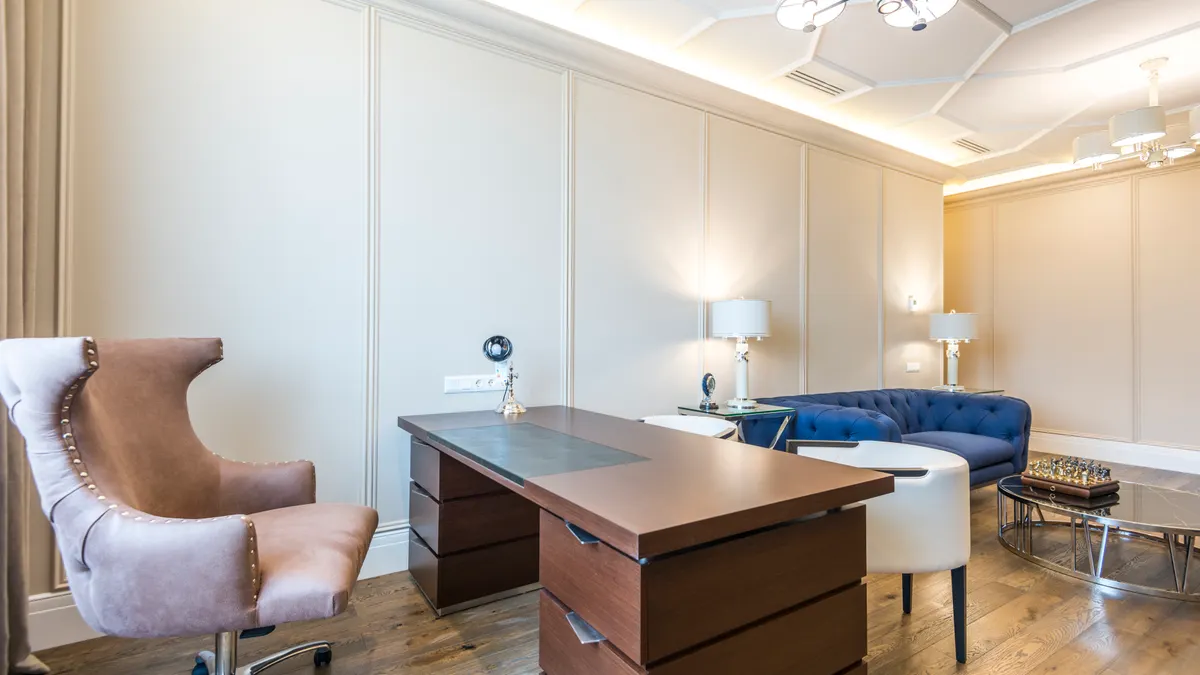
Premium home office furniture is worth it when the room has to do two jobs at once: support serious work and impress the person on the other side of the call. In a client-facing space, finish quality, scale, and cable control matter as much as comfort.
Picture this: you’re on a video call with a new client, and the desk behind you shows tangled cords, a wobbling shelf, and a chair that looks like it belongs in a dorm room. That room sends the wrong message fast. A better setup uses a desk with a finished back, a chair with a real frame, and storage that closes.
The truth is, premium furniture is not about gold trim or a fancy label. It is about pieces that hold their shape, wear well at the edges, and do not make the room work harder than it should. According to the U.S. Bureau of Labor Statistics, the median annual wage for interior designers was $63,490 in May 2024, which is one reason layout and finish choices matter in rooms clients can see.
- Look for solid wood, veneer over stable substrate, or metal frames instead of thin composite panels.
- Choose finished backs and side panels if clients may see the room from more than one angle.
- Favor quiet hardware and drawers that close without slamming.
- Avoid pieces that need a wall to hide their weakest side.
What should an executive home office desk actually do?
An executive desk should give you a wide, stable work surface, hide the mess, and look finished from across the room. If it cannot handle those three jobs, it is decoration, not office furniture.
Picture this: you’re signing documents, docking a laptop, charging a phone, and joining a meeting in the same 6-foot stretch of space. The desk has to keep that setup clean. A good executive desk often has a broad top, drawers for daily carry items, and some form of cable pass-through or hidden routing.
According to the American Society of Interior Designers, workspace layout affects both function and perceived professionalism, which is why desk choice matters even before you add accessories. Here’s the catch: many “executive” desks look substantial but skip the details that matter. A thick top can still sit on cheap legs. A handsome finish can still chip at the edges. A desk with no cord path turns into a cable nest on day one.
- Best choice: a desk with a finished back, closed drawer fronts, and room for a monitor, laptop, and writing surface.
- Good second choice: a compact writing desk if the room is small and the client view is controlled.
- Avoid: glass tops, open metal frames, and desks with no visible cable plan if the space is client-facing.
A premium desk also needs the right scale. Too small, and it looks temporary. Too large, and it swallows the room. In most executive home offices, the desk should feel anchored, not oversized for its own sake.
Which chair belongs in a premium client-facing office?
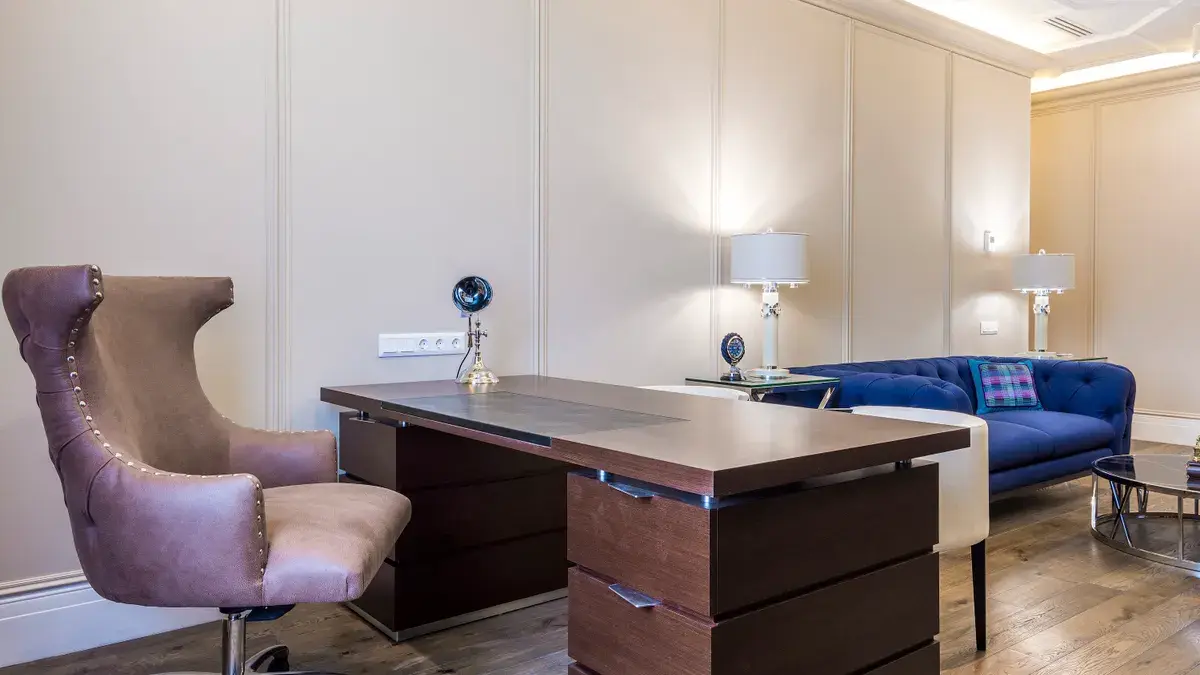
A high-back ergonomic chair belongs in a premium client-facing office because comfort and image have to meet in one seat. The chair is the one item clients notice most on camera, and it is the one item you feel for hours.
Picture this: you’re in a two-hour meeting, and the chair either supports your posture or keeps forcing micro-adjustments that pull your attention away from the call. A true executive chair offers adjustable height, armrest support, and tilt control, while still looking polished enough for a boardroom feel.
The main benefit is that a chair does not have to look medical to work well. Many premium models use leather, bonded leather, fabric, or mesh with a heavier frame and cleaner lines. What matters is the fit to your body and the quality of the mechanism.
- Pick a chair with seat height adjustment, tilt tension, and arm adjustments if you sit for long stretches.
- Check whether the seat edge feels supportive rather than sharp.
- Make sure the base and casters match your floor type.
- Avoid chairs with shallow seats if you are tall, or very deep seats if your feet do not plant well.
A real drawback: many executive chairs are heavy and awkward to move, especially in a tight room. Some also run warm if they use thick upholstery. Those trade-offs are normal, but they matter if the office doubles as a guest room or photography space.
What storage keeps a room looking executive instead of cluttered?
Closed storage keeps an executive office looking controlled, which is exactly what a client-facing room needs. Open shelves can work in a study, but they usually make a business space look busier than it should.
Picture this: you’re standing behind your desk on camera, and the shelf beside you shows printer boxes, paper piles, and cables. Even a beautiful desk loses authority if the background looks improvised. A credenza, filing cabinet, or low storage console solves that by hiding the things a room should not show.
A premium storage piece should have solid doors or drawers, a top that can hold a printer or lamp without flexing, and hardware that still feels smooth after daily use. Locking drawers can help if you keep sensitive files at home.
| Criteria | Open shelving | Closed storage | Winner for client-facing rooms |
|---|---|---|---|
| Visual calm | Shows everything | Hides most clutter | Closed storage |
| Maintenance | Dusts fast | Easier to keep neat | Closed storage |
| Display space | Good for books and objects | Limited display | Open shelving |
| Privacy for files | Poor | Better | Closed storage |
| Printer storage | Often awkward | Better fit | Closed storage |
| Camera background | Can look busy | Reads cleaner | Closed storage |
| Style flexibility | More casual | More formal | Closed storage |
| Room openness | Can feel lighter | Can feel heavier | Open shelving in small rooms |
The weakness of closed storage is obvious: it can make a small room feel heavy if the piece is too large or too dark. If the room is compact, choose a lower cabinet or a narrower credenza instead of a wall-sized storage unit.
How do you choose materials that look expensive without being fragile?
The best materials for premium home office furniture are the ones that stay straight, clean well, and age with less drama. That usually means real wood, quality veneer, powder-coated metal, and durable upholstery rather than shiny surfaces that show every mark.
Picture this: you’re hosting a client meeting in a room that gets daylight all afternoon. Cheap finishes show fingerprints, edge wear, and uneven seams under that kind of light. Better materials hold their shape and keep the room looking deliberate. The U.S. General Services Administration also recommends durable, maintainable finishes for high-use work environments, which aligns with the needs of a home office that serves clients.
The truth is, “expensive-looking” is not the same as “expensive.” A well-made veneer can look richer than a poorly finished solid wood piece. A matte surface can hide wear better than a glossy one. A heavy-feeling drawer glides better than a flashy front with weak hardware.
- Real wood: warm, formal, and durable, but it can dent and needs care.
- Veneer over stable core: often the sweet spot for premium desks because it gives a refined look with less warping risk.
- Metal frames: strong and useful for support pieces, though they can feel cold if overused.
- Upholstery: great for chairs, but pick a material you can keep clean.
One detail people skip: the back of the furniture. In a client-facing room, the rear panel often shows on video or from the doorway. If the listing only shows the front, that is a warning sign.
What layout works best in a room clients can actually see?
The best layout puts the desk where the camera sees the cleanest background and keeps storage out of the main sightline. A premium room feels intentional when the path from door to desk is clear and the furniture does not crowd the center of the room.
Picture this: you’re sitting for a call, and the desk is angled so the background shows a cabinet, a lamp, and a simple wall instead of a tangle of cords. That kind of layout does more for the room than an expensive chair in the wrong place.
A few practical rules help:
- Place the desk so the back or side of the room, not the cable zone, faces the camera.
- Leave enough room behind the chair to move without bumping storage.
- Use one tall piece and one low piece rather than several medium pieces that make the room feel chopped up.
- Keep the desk clear enough that a laptop, notebook, and one or two accessories look like a chosen setup, not a spillover surface.
Now, you might be wondering about small rooms. In a compact office, a premium setup still works if you scale down the storage and choose a desk with drawers built in. A large cabinet plus a large desk can overwhelm a modest room fast.
What should you skip, even if the photos look good?
You should skip pieces that look premium in a photo but fail on structure, scale, or cleanup. A glossy finish and a stylish angle can hide weak construction.
Picture this: you’re comparing two desks online. One has thick lines and dramatic legs, but the listing says little about the back panel, drawer joinery, or cable access. The other is plainer but gives actual construction details. The plainer one often wins in a real office.
Here are the most common traps:
- Glass desks look sleek but can show smudges, glare, and cords.
- Open-leg desks can feel airy, but they expose mess and often lack storage.
- Overly ornate pieces can make a professional room feel dated.
- Oversized chairs can dominate a small office and block movement.
- Matching sets can save time, but many feel flat and generic in person.
A premium office should feel curated, not copied from a catalog page. One strong desk, one supportive chair, and one quiet storage piece usually beat a full matched set.
The honest side-by-side: executive desk vs. modular setup
An executive desk wins for a client-facing office that needs presence; a modular setup wins when flexibility matters more than status. That is the real split, and it changes the whole buy.
Picture this: you’re deciding between a large classic desk and a lighter desk-plus-side-table setup. The classic desk gives authority and a cleaner field of view. The modular setup lets you rearrange for different work habits, but it rarely looks as composed.
| Criteria | Executive Desk | Modular Setup | Winner for [condition] |
|---|---|---|---|
| Client impression | Reads more formal and established | Can look casual or improvised | Executive Desk for client-facing rooms |
| Layout flexibility | Fixed footprint | Easy to move and rework | Modular Setup for changing rooms |
| Storage | Often built in or paired with a credenza | Usually added separately | Executive Desk for neat, permanent offices |
| Camera background | Cleaner when the back is finished | More chance of visible cords or gaps | Executive Desk for video calls |
| Small-room fit | Can overwhelm tight spaces | Easier to scale down | Modular Setup for compact rooms |
| Authority | Stronger executive feel | Less formal | Executive Desk for leadership roles |
| Upgrade path | Slower to change pieces | Simple to swap parts | Modular Setup for evolving needs |
| Long-term polish | Holds a clear visual identity | Depends on mixing the right parts | Executive Desk for consistent brand image |
The verdict is simple: the executive desk is the better anchor for most premium home offices that face clients, while the modular setup is better when the room must change shape often.
When should you choose one premium piece over a full room set?
Choose one premium anchor piece when the room is already functional and needs presence, not a total rebuild. A full room set only makes sense when the room is empty or the existing furniture clashes badly.
Picture this: you’re moving into a home office that already has good lighting, decent paint, and enough floor space. In that case, a strong desk or chair can transform the room without forcing you into a matching package. A full set can be too much if the space already has structure.
The catch is that sets can look coordinated on day one and generic by month three. They also make it harder to upgrade one piece later without the room looking mismatched. One premium desk plus a carefully chosen chair and storage unit usually gives more control.
- Choose one anchor piece if the room already has good bones.
- Choose a full set only if you are furnishing from scratch and want a fast visual match.
- Skip matched sets if you care about mixing wood tones, upholstery, and metal finishes with more precision.
- Keep at least one piece visually quieter so the room does not feel heavy.
A good premium office is edited. Too many identical finishes can make it look like a showroom instead of a place where real work happens.
What are the exception scenarios where the usual advice flips?
The usual advice flips when the room is tiny, the calls are short, the background is private, or the office doubles as another room. Those cases change the furniture hierarchy fast.
Picture this: you’re working from a converted nook, not a spare room. You may not need a big executive desk at all. A narrower desk with closed storage can beat a large formal setup if it leaves enough walking space and does not block the light.
Here are the main exceptions:
- Tiny room, heavy use of the door wall: choose a compact desk with one strong chair instead of a full executive set.
- Private background, no client video: comfort can outrank appearance, so the chair matters more than the desk finish.
- Shared room: storage that closes becomes more important than visual style because the room needs to reset fast.
- Frequent rearranging: modular pieces win if the office also needs to become a guest room or studio.
When those conditions apply, the “best-looking” furniture is not always the best furniture. The right answer changes with the room, not the brochure.
The verdict: which premium furniture setup should you buy?
Choose an executive desk plus a supportive high-back chair if the room is client-facing and you want the office to look established on camera. Choose a modular setup with strong closed storage if the room is small, shared, or likely to change. Neither if the space is too cramped to fit a clear path, a proper chair, and at least one closed storage piece.
Picture this: you’re ready to buy, but the room still has no plan. The right move is not to fill every wall. It is to choose the piece that solves the room’s biggest problem first.
A premium home office works when it looks composed from the doorway, stays clean through a full workday, and does not make every call feel like a set change. That is the standard worth paying for.
What if I only buy one piece first?
Buy the desk first if the room is visible on video, and buy the chair first if you sit for long blocks and already have a decent surface. The desk shapes the room; the chair shapes the day.
If the room is mostly for client calls, start with the desk and storage. If the room is mostly for deep work, start with the chair. A premium office feels right when the first piece solves the biggest problem, not when every item arrives at once.
FAQ
What furniture makes a home office look executive?
A home office looks executive when the desk is substantial, the chair is supportive, and the storage closes. A finished back panel, real cable control, and a low, tidy cabinet matter more than decorative extras. Those details create the calm, controlled look clients expect.
Is a standing desk a good choice for a client-facing office?
A standing desk can work, but it is not the default best choice for a client-facing room. Some models look too technical, and many need more cable planning to stay neat. If the desk will be seen on camera all the time, a traditional executive desk often reads as more polished.
Should I buy matching furniture sets?
Matching sets can be convenient, but they are rarely the strongest choice for a premium office. They can look flat and limit your ability to mix better pieces later. A better route is one strong desk, one chair that fits your body, and one storage piece that fits the room.
What finish is easiest to keep looking good?
A matte or soft-sheen finish is usually easier to live with than a high-gloss one. Gloss shows fingerprints, dust, and cable clutter more easily. A good veneer or sealed wood finish tends to hide everyday wear better in a busy office.
How do I make a small office feel premium?
A small office feels premium when it is edited hard. Use one compact desk, one serious chair, and one closed storage piece, then leave open floor space. Keep the background simple and avoid overfilling the room with matching items that make it feel crowded.
Drafted with AI; not yet reviewed by a person.
Leave a Reply